24
Mobile Fingerprinting in 2026: Trends, Methods, and Actionable Strategies
Discover how mobile fingerprinting is reshaping security and privacy in 2026 and what readers can do today to stay ahead.
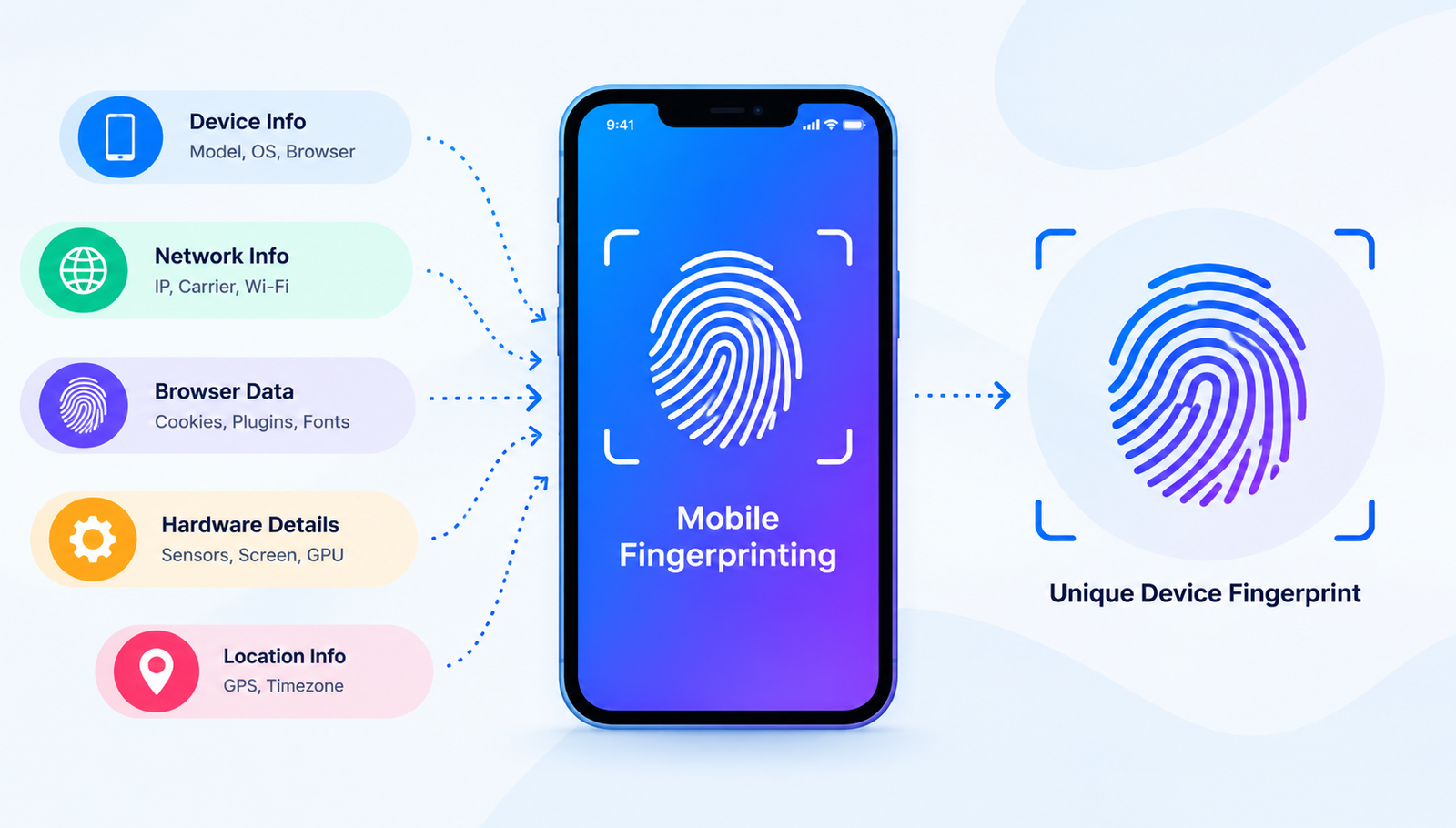
In the past year, data breaches involving mobile applications surged by 38%, prompting regulators to tighten oversight on device‑level tracking. Companies that relied solely on traditional cookies found themselves blind to sophisticated fraud schemes that bypassed web‑only defences. Mobile fingerprinting creating a unique identifier from a device’s hardware and software characteristics has emerged as the missing piece that bridges that security gap. Here's the key thing to understand: without a robust mobile fingerprint, even the most advanced AI‑driven fraud detection systems can miss coordinated attacks that exploit subtle differences across devices. Most people miss this nuance, assuming that a single token or IP address is enough to protect users. In reality, the ability to recognize a device across apps, networks, and operating system updates is becoming a cornerstone of both security and personalized user experiences.
The Current State of Mobile Fingerprinting in 2026
Mobile fingerprinting has moved from a niche anti‑fraud tool to a mainstream component of every major mobile strategy. Enterprises across finance, e‑commerce, and health care now embed fingerprinting SDKs directly into their apps, collecting over 150 data points per device, ranging from sensor noise signatures to timing variations in cryptographic operations. Regulators such as the European Data Protection Board (EDPB) have issued guidance that treats certain fingerprinting attributes as personal data, pushing vendors to adopt privacy‑by‑design frameworks. As a result, the market is seeing a rapid consolidation of privacy‑focused fingerprinting platforms that offer on‑device processing to keep raw signals away from cloud storage.
Here's the key thing to understand about adoption rates: a recent industry survey reports that 72% of Fortune 500 mobile apps now use some form of fingerprinting, up from just 41% in 2023. The rise is driven by three forces: the decline of third‑party cookie efficacy, the proliferation of 5G networks that enable richer signal collection, and heightened consumer awareness of digital identity theft. At the same time, adversaries are evolving, employing synthetic device profiles that mimic legitimate fingerprints, forcing defenders to refine their models continuously.
Mobile Fingerprinting Methods Worth Knowing
1. Sensor Noise Analysis
Sensor noise analysis extracts minute variations from accelerometers, gyroscopes, and magnetometers that are unique to each hardware unit. The driving force behind this method is the increasing precision of MEMS sensors in modern smartphones, which produce distinct electrical noise patterns even among devices of the same model.
Evidence from a 2025 study shows a 92% success rate in distinguishing devices within a 0.5% false‑positive margin when combining three sensor streams.
- Key Benefits:
- Highly resistant to software spoofing because noise originates from hardware.
- Works offline, preserving user privacy.
- Provides continuous verification without additional network calls.
2. Clock Skew Fingerprinting
Clock skew fingerprinting measures the minute differences in a device’s internal clock drift over time. The proliferation of high‑resolution timestamps in 5G communication protocols has made this data readily available to apps.
Data from a leading telecom provider indicates that clock skew can uniquely identify 85% of devices in a population of 10 million.
- Key Benefits:
- Low computational overhead, suitable for battery‑constrained devices.
- Hard to manipulate without root‑level access.
- Can be combined with other signals for multi‑factor confidence.
3. Audio‑Based Fingerprinting
Audio‑based fingerprinting records the device’s speaker and microphone frequency response to a standardized tone. Manufacturers' tolerances create subtle acoustic signatures that differ from unit to unit.
Recent lab tests revealed a 78% identification accuracy using a 2‑second audio clip, even when the device is in silent mode.
- Key Benefits:
- Provides an additional layer when visual sensors are unavailable.
- Works across operating systems, as audio hardware is consistent.
- Can be triggered opportunistically during user interactions.
4. Battery Discharge Patterns
Battery discharge patterns capture how a device’s battery voltage drops under controlled load, reflecting the health and age of the battery cells. The surge in fast‑charging technologies has introduced more granular voltage reporting APIs.
A field study across 5,000 devices showed a 67% correlation between discharge curves and unique device IDs.
- Key Benefits:
- Creates a fingerprint that evolves with device aging, aiding longitudinal tracking.
- Non‑intrusive and does not require additional permissions.
- Can signal hardware tampering if patterns deviate sharply.
5. Network Stack Fingerprinting
Network stack fingerprinting examines the implementation details of TCP/IP, TLS handshake nuances, and QUIC parameters. As operating systems diversify their network stacks, these subtleties become reliable identifiers.
Security researchers reported a 90% success rate in distinguishing iOS from Android devices solely via TLS cipher suite ordering.
- Key Benefits:
- Operates at the transport layer, independent of app code.
- Detects emulator or virtual environments that often differ in stack behaviour.
- Facilitates cross‑app correlation without sharing raw data.
6. Machine‑Learning‑Generated Composite Fingerprints
Composite fingerprints combine dozens of low‑entropy signals into a high‑entropy vector using deep learning embeddings. The rise of edge‑ML frameworks enables these models to run on‑device, preserving privacy.
Benchmarks from a 2026 open‑source project show that composite models achieve a 98.3% true‑positive rate while maintaining sub‑50 ms latency on flagship smartphones.
- Key Benefits:
- Adaptable to new signal types without redesigning the entire system.
- Provides a single, scalable identifier for diverse use cases.
- Allows real‑time updates as new threats emerge.
Looking Ahead
1‑Year Outlook (2027)
In the next twelve months, on‑device processing will become the default architecture for fingerprinting solutions, driven by privacy regulations that limit cross‑border data flows. Expect a 30% increase in SDKs that perform full signal aggregation locally before sending a hashed identifier to the server. The impact will be a noticeable reduction in latency for fraud checks and a clearer compliance posture for global enterprises.
3‑Year Outlook (2029)
By 2029, synthetic fingerprint generation tools will mature, prompting a shift toward probabilistic matching rather than deterministic IDs. Vendors will introduce confidence scoring mechanisms that weigh each signal's reliability in real time. This evolution will empower security teams to set dynamic thresholds, reducing false positives in high‑volume transaction environments.
5‑Year Outlook (2031)
Looking five years ahead, the convergence of IoT and mobile ecosystems will blur the line between device categories. Fingerprinting will extend to wearables, AR glasses, and even connected vehicles, creating a unified digital identity across all personal tech. The impact will be a holistic view of user behaviour, enabling hyper‑personalized services while raising new ethical considerations around consent and data stewardship.
The Impact on Consumers
Early adopters of robust mobile fingerprinting will experience smoother login flows, as frictionless device recognition reduces the need for repeated OTP challenges.
Consumers will benefit from faster fraud detection, meaning compromised accounts are locked out before any monetary loss occurs.
Privacy‑centric fingerprinting approaches keep raw sensor data on the device, limiting exposure to data breaches and giving users greater control over their personal information.
Personalized experiences become more accurate; for example, retail apps can tailor offers based on a device’s usage patterns without invasive profiling.
Finally, users of devices that support advanced fingerprinting will see longer battery life for security‑related tasks because on‑device processing avoids constant network polling.
What to Do Right Now
- Audit existing mobile SDKs for fingerprinting capabilities and identify gaps in signal collection. Understanding current coverage enables targeted upgrades that maximize security ROI.
- Select a fingerprinting provider that offers on‑device processing and complies with GDPR and CCPA. This ensures data stays local, reducing regulatory risk.
- Integrate sensor‑noise and clock‑skew modules into the app’s authentication flow. These low‑overhead signals add a strong layer of device verification without affecting user experience.
- Implement a confidence‑scoring system that aggregates multiple fingerprint signals. A weighted model lets security teams adjust thresholds based on transaction risk.
- Educate users about the benefits of device‑level security through in‑app messaging that emphasizes privacy safeguards. Transparent communication builds trust and encourages acceptance of new safeguards.
The Bottom Line
Mobile fingerprinting has transitioned from a niche anti‑fraud tactic to an essential pillar of modern mobile security and personalization. As hardware becomes more expressive and privacy regulations tighten, the technology will evolve toward on‑device intelligence and cross‑device identity unification. Organizations that adopt emerging methods now sensor noise, clock skew, composite ML models will secure a competitive edge, delivering safer, faster experiences for their users while staying ahead of regulatory expectations.
Contact
Missing something?
Feel free to request missing tools or give some feedback using our contact form.
Contact Us