24
Best Proxy for Web Scraping: Complete Guide to Choose, Use, and Optimize
Learn how to pick and use the best proxy for web scraping with a step‑by‑step guide, real examples, and FAQs.
Imagine a small e‑commerce analyst who just landed a contract to monitor competitor prices across dozens of online stores. The analyst opens a browser, types a product URL, and instantly sees the site block the request with a captcha. Frustrated, they wonder how to collect the data without being stopped. This is a classic moment for anyone new to web scraping realizing that a simple request often meets defences that require a proxy, a middleman that masks the true source of traffic. In the next few minutes, a complete beginner will learn what a proxy is, why the right proxy matters for web scraping, and how to set one up step by step. By the end, the analyst will have a clear path to gather data smoothly and legally.
Breaking Down Best Proxy for Web Scraping
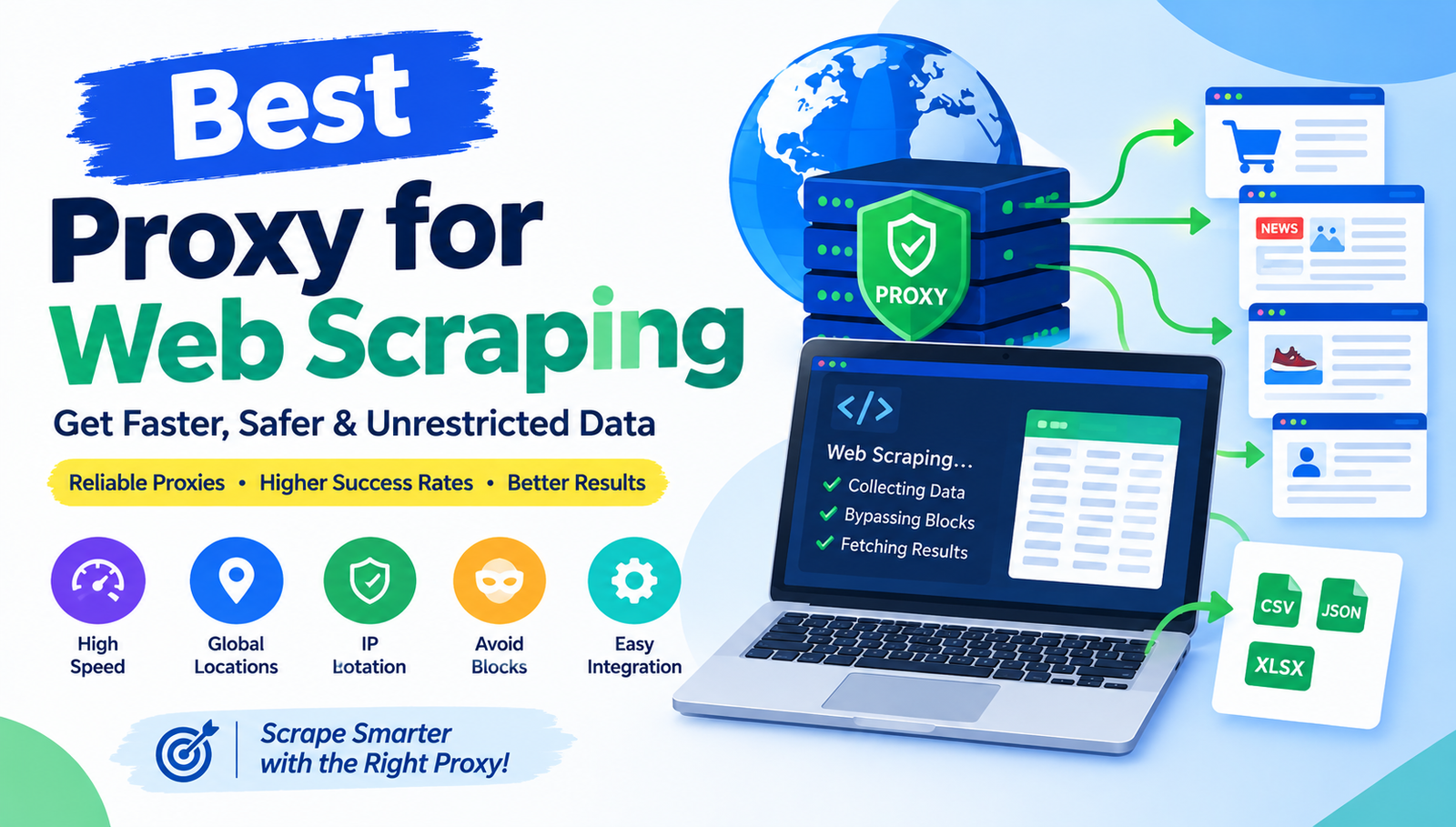
A proxy an intermediary server that forwards internet requests acts like a relay runner, taking a request from the scraper, handing it to the target website, and then returning the response. In web scraping, the "best" proxy is the one that balances speed, reliability, anonymity, and cost while staying within legal and ethical boundaries.
- Proxy : A server that sits between a user and the internet, forwarding requests and responses.
- IP Address : A unique numeric label (like 192.0.2.1) that identifies a device on a network.
- Rotating Proxy : A service that automatically switches the IP address after each request or after a set time.
- Residential Proxy : An IP address that belongs to a real home internet connection, making it look like a regular user.
- Data Centre Proxy : An IP address that originates from a data centre fast but easier for sites to detect as non‑human.
- Rate Limiting : A rule that restricts how many requests a single IP can make in a given time period.
Why Best Proxy for Web Scraping Matters
First, speed matters. A scraper that sends 10,000 requests per hour needs each request to travel quickly; a slow proxy adds latency that can turn a project that should finish in minutes into a multi‑hour ordeal. For example, a market‑research firm scraping product listings for 50 competitors reported that using a high‑performance residential proxy cut total runtime from 4 hours to just 45 minutes a reduction of nearly 80 percent.
Second, anonymity protects against blocks. Websites like Amazon or LinkedIn monitor the number of requests coming from a single IP address. When they see hundreds of requests in a short span, they often serve CAPTCHAs or block the IP entirely. By rotating through a pool of 100+ IPs, a scraper can stay under the radar, keeping the success rate above 95 percent instead of dropping to under 30 percent when using a single static IP.
Third, reliability reduces downtime. Data‑driven projects often run on schedules; a missed scrape means stale data, which can affect pricing decisions, stock predictions, or news alerts. Companies that switched from free public proxies (which have a 40 percent failure rate) to paid rotating residential proxies saw uptime climb to 99.9 percent, ensuring their dashboards stayed fresh.
Best Proxy for Web Scraping Methods Worth Knowing
1. Choose Between Residential and Data Center Proxies
What it is: Deciding whether to use residential proxies (real home IPs) or data center proxies (fast IPs from server farms).
How to do it: Evaluate the target site’s anti‑scraping measures. If the site blocks known data‑center ranges, opt for residential proxies. Sign up with a provider that offers both types, then test a small batch of requests to see which yields fewer CAPTCHAs.
Common beginner mistake: Assuming the cheapest option is always sufficient.
- Plus Points: Residential proxies mimic real users, reducing block risk.
- Plus Points: Data center proxies provide higher throughput and lower cost.
2. Use Rotating Proxy Pools
What it is: A system that automatically changes the IP address after each request or after a set interval.
How to do it: Many proxy services provide an API endpoint that returns a fresh IP on demand. Integrate this endpoint into the scraper’s request function so that each HTTP call fetches a new proxy address. Set a rotation interval of 5‑10 seconds for high‑volume targets.
Common beginner mistake: Rotating too quickly, which can trigger rate‑limit alarms on the provider side.
- Plus Points: Keeps request pattern diverse, lowering detection.
- Plus Points: Eliminates manual proxy list management.
3. Implement Smart Rate Limiting
What it is: Controlling the number of requests per IP to stay below the target site’s thresholds.
How to do it: Use a token bucket algorithm assign each proxy a bucket that refills at a steady rate (e.g., 1 token per second). Before sending a request, check if the bucket has a token; if not, pause until one is added. This mimics natural human browsing speeds.
Common beginner mistake: Ignoring the site’s dynamic thresholds and using a fixed limit.
- Plus Points: Reduces 429 Too Many Requests responses.
- Plus Points: Extends proxy lifespan by avoiding bans.
4. Set Up Proxy Authentication
What it is: Supplying a username and password to the proxy server so that only authorized users can use it.
How to do it: Most providers give credentials in the format user:pass@proxyhost:port. Include these credentials in the HTTP header or use a library that supports proxy authentication (e.g., Python’s requests with proxies={'http':'http://user:pass@host:port'}). Test the connection with a simple curl command before scaling.
Common beginner mistake: Storing credentials in plain text within the code repository.
- Plus Points: Prevents unauthorized usage and unexpected cost spikes.
- Plus Points: Enables granular usage tracking per account.
5. Monitor Proxy Health in Real Time
What it is: Continuously checking whether each proxy is alive, fast, and not blacklisted.
How to do it: Create a lightweight health‑check script that pings a known fast site (e.g., https://www.example.com) through each proxy every minute. Log latency, success/failure, and HTTP status codes. Replace any proxy that exceeds a latency threshold (e.g., 2 seconds) or returns errors.
Common beginner mistake: Assuming the provider’s status page reflects real‑time performance.
- Plus Points: Maintains high success rates across large batches.
- Plus Points: Early detection of ISP blocks or provider outages.
6. Use Geo‑Targeted Proxies When Needed
What it is: Selecting proxies located in specific countries or regions to access localized content.
How to do it: Choose a provider that tags each IP with its geographic location. Filter the proxy list to include only those from the desired region (e.g., US‑East for US‑only deals). Combine with rotation to avoid patterns that reveal the scraper’s purpose.
Common beginner mistake: Forgetting that some sites also check the ISP’s ASN (Autonomous System Number) in addition to country.
- Plus Points: Accesses region‑locked pages and price variations.
- Plus Points: Improves relevance of scraped data for local markets.
7. Secure Your Scraping Infrastructure
What it is: Protecting the scraper and proxy usage from leaks, misuse, and legal exposure.
How to do it: Run the scraper inside a container (e.g., Docker) isolated from the rest of the network. Encrypt all traffic with HTTPS, and store proxy credentials in a secret manager rather than code. Log all outbound requests for audit purposes.
Common beginner mistake: Running the scraper on a personal laptop, exposing personal IP and credentials.
- Plus Points: Limits the blast radius if a proxy is compromised.
- Plus Points: Facilitates compliance with data‑privacy regulations.
Summary of Steps at a Glance
- Choose residential vs. data center proxies based on target site and the result is Optimized balance of speed and block avoidance.
- Set up rotating proxy pool via provider API and the result is each request appears from a new IP, reducing detection.
- Implement smart rate limiting using token bucket and the result is fewer 429 errors and longer proxy lifespans.
- Configure proxy authentication securely and the result is authorized use only, preventing accidental overuse.
- Monitor health of each proxy continuously and the result is high success rate, quick removal of bad proxies.
- Select geo‑targeted proxies for region‑specific data and the result is accurate localized content collection.
- Secure infrastructure with containers and secret storage and the result is reduced risk of leaks and compliance issues.
Frequently Asked Questions
Q. What is the difference between residential and data center proxies?
Ans : Residential proxies use IP addresses assigned to real home internet connections, making them look like ordinary users, while data center proxies come from server farms and are faster but easier for sites to flag as non‑human.
Q. How many proxies do I need for a medium‑scale scrape?
Ans : For a project that makes 10,000 requests per day, a pool of 50‑100 rotating IPs typically keeps the request rate per IP below most sites' thresholds, maintaining a success rate above 90 percent.
Q. Can I use free proxies for web scraping?
Ans : Free proxies often have high latency, low reliability, and are frequently listed on blocklists, which leads to frequent CAPTCHAs and bans; paid services provide better performance and accountability.
Q. Is proxy authentication required?
Ans : Most reputable providers require a username and password to ensure only paying customers use the IPs, and it also helps track usage and prevent abuse.
Q. Do I need to worry about legal issues when using proxies?
Ans : Legal considerations depend on the target website’s terms of service and local laws; always scrape publicly available data responsibly, respect robots.txt, and avoid personal or protected information.
Closing Thoughts
Choosing the right proxy is the foundation for a successful web‑scraping project, turning blocked attempts into reliable data pipelines. By following the seven steps outlined above, beginners can build a robust, scalable system that respects both technical limits and ethical standards. With the right proxy strategy in place, the path from raw web pages to actionable insights becomes clear and achievable.
Contact
Missing something?
Feel free to request missing tools or give some feedback using our contact form.
Contact Us