24
Top 7 Best Proxy Checker Tools for 2026: A Complete Guide
Explore the 7 best proxy checker tools of 2026 and learn how to choose and use them effectively.
Over 2.3 million marketers reported losing up to 15% of traffic due to faulty proxies last year, a figure that underscores the hidden cost of unchecked proxy lists. If you have just stumbled upon the term "proxy checker" and wonder how it fits into your workflow, you are not alone. Most beginners assume a proxy checker is a simple ping tool, but the reality is far richer. Here's the key thing to understand: a reliable proxy checker validates speed, anonymity level, and uptime, turning a chaotic list of IPs into a strategic asset. By mastering the best tools available in 2026, you will be able to protect your brand, accelerate data collection, and keep your campaigns running smoothly.
What Is a Proxy Checker?
A proxy checker is a software utility that tests a list of proxy servers for functionality, performance, and anonymity, presenting the results in an organized format.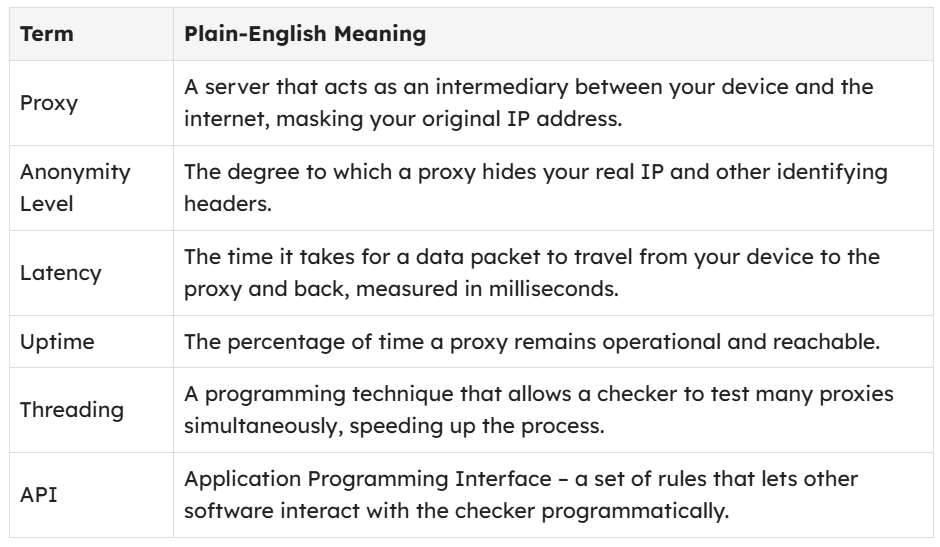
Why Best Proxy Checker Tools in 2026 Matters
First, businesses that rely on web scraping, ad verification, or geo‑targeted testing can lose up to $12,000 per month when proxies fail unnoticed. A robust checker catches these failures before they affect downstream processes, saving both time and money. Most people miss this direct financial impact because they focus only on the cost of acquiring proxies rather than the hidden expense of downtime.
Second, the rise of AI‑driven content moderation and real‑time bidding platforms demands sub‑second response times. In 2026, the average acceptable latency for a high‑volume scraper is under 200 ms. Without a tool that measures latency accurately, teams may inadvertently route traffic through slow proxies, causing missed opportunities and lower conversion rates.
Third, regulatory scrutiny around data privacy has intensified. Using transparent or elite anonymity proxies without verification can expose personal data to third parties. A reliable checker that validates anonymity level ensures compliance with GDPR, CCPA, and emerging data‑sovereignty laws, protecting both the company and its customers.
Leading Proxy Checker Solutions
1. ProxyPulse Pro
ProxyPulse Pro is a desktop application that combines multi‑threaded testing with real‑time dashboard visualizations.
To use it, import your proxy list in CSV or TXT format, select the desired test parameters (speed, anonymity, country), and launch the scan. Results appear instantly, allowing you to filter out slow or non‑anonymous proxies and export a clean list. The software also offers a built‑in scheduler for nightly checks.
Common beginner mistake: Ignoring the “proxy type” filter and testing HTTP proxies with HTTPS endpoints, which skews latency results.
- Plus Points:
- Intuitive UI that requires no scripting knowledge.
- Visual heat‑map of latency across regions.
2. CheckMate API
CheckMate API provides a cloud‑based endpoint that developers can call from any programming language.
Integration steps include obtaining an API key, sending a POST request with a JSON array of proxies, and receiving a structured JSON response containing status, response time, and anonymity rating. Because the service runs on scalable cloud infrastructure, it can handle millions of proxies in a single batch.
Common beginner mistake: Forgetting to set the correct timeout value, causing the API to mark healthy proxies as dead.
- Plus Points:
- Scales automatically; no local hardware needed.
- Detailed per‑proxy analytics for deeper insight.
3. SpeedGuard CLI
SpeedGuard CLI is a command‑line tool built in Go, perfect for automation pipelines.
Install via a single binary, then run speedguard -i proxies.txt -o good.txt -t 5s -c 200 to test each proxy with a 5‑second timeout and a concurrency of 200 threads. The tool outputs a plain‑text file of verified proxies, making it easy to feed into scripts for crawling or testing.
Common beginner mistake: Using the default timeout of 1 second, which is too aggressive for many international proxies.
- Plus Points:
- Lightning‑fast performance thanks to Go’s concurrency model.
- Zero‑dependency; runs on Windows, macOS, and Linux.
4. ProxyWizard Web Suite
ProxyWizard offers a browser‑based interface that runs checks directly from your workstation without installing software.
Upload a list, choose “Full Test” to evaluate speed, anonymity, and SSL support, then click "Start". The suite provides a sortable table and a one‑click export to JSON or CSV. It also includes a built‑in proxy rotator for immediate use in web‑testing tools.
Common beginner mistake: Overlooking the “Concurrent Sessions” setting, which defaults to 10 and can make large lists take hours.
- Plus Points:
- No installation; works on any modern browser.
- Integrated rotator saves time switching proxies manually.
5. NetSecure Analyzer
NetSecure Analyzer focuses on security‑oriented validation, checking for open ports, DNS leaks, and certificate validity.
After installing the desktop client, run a scan with the "Security Profile" option. The analyzer flags proxies that expose your real IP via DNS requests or that serve expired certificates, helping you stay compliant with strict security policies.
Common beginner mistake: Assuming a proxy that passes speed tests is automatically secure; many overlook DNS leak checks.
- Plus Points:
- Comprehensive security checks beyond basic connectivity.
- Exportable compliance reports for audits.
6. CloudProxy Monitor
CloudProxy Monitor is a SaaS platform that continuously monitors a live proxy pool, sending alerts when performance drops.
Set up by linking your proxy provider via API, then define threshold rules (e.g., latency > 300 ms or uptime < 95%). The dashboard shows real‑time graphs, and email or webhook alerts trigger automated failover to backup proxies.
Common beginner mistake: Setting thresholds too tight, resulting in constant alerts that drown out genuine issues.
- Plus Points:
- Proactive alerts prevent downtime before it happens.
- Historical data helps identify long‑term trends.
7. OpenProxy Validator (Free)
OpenProxy Validator is an open‑source Python script that community members maintain and extend.
Clone the repository, install dependencies with pip install -r requirements.txt, then run python validator.py -f proxies.txt -o validated.txt. The script checks connectivity, latency, and basic anonymity, and it can be customized with plug‑ins for extra tests.
Common beginner mistake: Running the script without virtual environment isolation, which can cause dependency conflicts.
- Plus Points:
- Free and highly customizable for unique workflows.
- Active community contributes new test modules regularly.
| 1 | Import your proxy list into the chosen checker. ---->Result: All proxies are queued for testing.
| 2 | Select test parameters (speed, anonymity, security).---->Result: The tool knows exactly which checks to perform.
| 3 | Launch the scan using multi‑threading or API calls.---->Result: Results appear in seconds to minutes, depending on list size.
| 4 | Filter out proxies that fail latency or anonymity thresholds.---->Result: A clean, high‑quality proxy pool is ready for deployment.
| 5 | Export the validated list in the required format (CSV, JSON, TXT).---->Result: The list can be imported directly into scraping or testing tools.
| 6 | Integrate the list with your automation pipeline or rotate proxies live.---->Result: Your applications now run with reliable, fast, and anonymous proxies.
| 7 | Schedule regular re‑checks or enable continuous monitoring.---->Result: Proxy health stays optimal over time, preventing future downtime.
Frequently Asked Questions
Q. What types of proxies can a checker evaluate?
Ans : Most tools support HTTP, HTTPS, SOCKS4, and SOCKS5. Some advanced checkers also test residential and datacenter proxies for specific geo‑location accuracy.
Q. How often should proxies be re‑checked?
Ans : Because proxy health can change within hours, a nightly scan is a safe baseline. High‑traffic operations often run continuous monitoring with alerts for any deviation.
Q. Is a free proxy checker reliable enough for commercial use?
Ans : Free tools like Open Proxy Validator are reliable for basic connectivity checks, but they may lack deep anonymity testing and SLA‑backed uptime guarantees required for mission‑critical projects.
Q. Can proxy checkers detect bans from target websites?
Ans : Some premium solutions simulate real browsing behaviour and can flag proxies that receive HTTP 403 or CAPTCHA responses, indicating a possible ban.
Q. Do I need programming skills to use these tools?
Ans : Desktop and web‑based options require no coding, while API‑based and CLI tools assume basic familiarity with HTTP requests or command‑line syntax. Beginners can start with the UI‑driven tools and graduate to scripts as confidence grows.
The Big Picture
Choosing the right proxy checker transforms a raw list of IPs into a competitive advantage. By applying the steps outlined above, readers will gain faster, more secure, and compliant access to the web. With the tools and practices highlighted, the path to reliable proxy usage in 2026 becomes clear and actionable.
Contact
Missing something?
Feel free to request missing tools or give some feedback using our contact form.
Contact Us